


Do New Laws and Regulations Affect Your Interchange?
Institutions have watched the Illinois Interchange Fee Prohibition Act (IFPA)* drama unfold, hoping courts or regulators will hold back its impacts for community institutions, at least within the borders of Illinois.
Federal regulators have passed rules for nationally chartered institutions, leaving state-chartered institutions to wrestle with IFPA. In June 2026, NCUA issued an interim final rule clarifying its “exclusive authority over federal credit unions' ability to charge non-interest fees and charges.” NCUA’s rule “preempt[s] any state law affecting non-interest charges and fees related to payment card services, including interchange fees.” The NCUA followed a similar preemption rule adopted by the Office of the Comptroller of the Currency earlier this year.
Still, since the Durbin Amendment to the Dodd-Frank Wall Street Reform and Consumer Protection Act passed over 15 years ago, laws limiting interchange have passed in Congress and state legislatures repeatedly. The spirit of IFPA – not assessing interchange on taxes or tips – is not likely to go away, even if defeated now; it has proven too politically appealing.
How does this touch banks and credit unions that do not operate in Illinois?
Any institution affected by IFPA, or in a state with similar political pushes, such as Georgia, Kentucky, California, or Wisconsin, must determine how much interchange may decline should lower total transaction amounts (less the tax or tip or both) become reality. Processing costs, and the entire interchange margin, may change in affected states first, but payment companies will spread these incremental costs out across the footprint of their business.
“Forecasting the effects of regulations can be quite challenging because institutions don't have an objective way to assess performance,” said Ava Farrell, Senior Strategic Consultant for Debit Networks at Engage fi. “Often, the debit network relationship is bundled in with their processor from the contract on down to settlement and invoicing.”
These laws make it more imperative that community institutions take a deeper look at their debit networks. However, interchange-related challenges were already developing long before IFPA emerged.
Has Your Account Holder Profile Changed?
Over the past decade, interchange revenue has been steadily eroding. Federal Reserve data show that for exempt issuers on single-message networks, the average interchange fee fell from $0.31 per transaction in 2011 to $0.27 in 2023. As a share of transaction value, it slid from 0.72 percent to 0.68 percent. A four-cent decline is modest on a single transaction, but banks and credit unions know the lost revenue adds up quickly across hundreds of thousands of transactions.
Many community financial institutions have felt this interchange erosion acutely because their customer bases skew heavily toward baby boomers and older generations who are not high debit users by comparison. Depositors also tend to spend differently as they age.
Graphic: Baby Boomers Decline as Revenue Driver
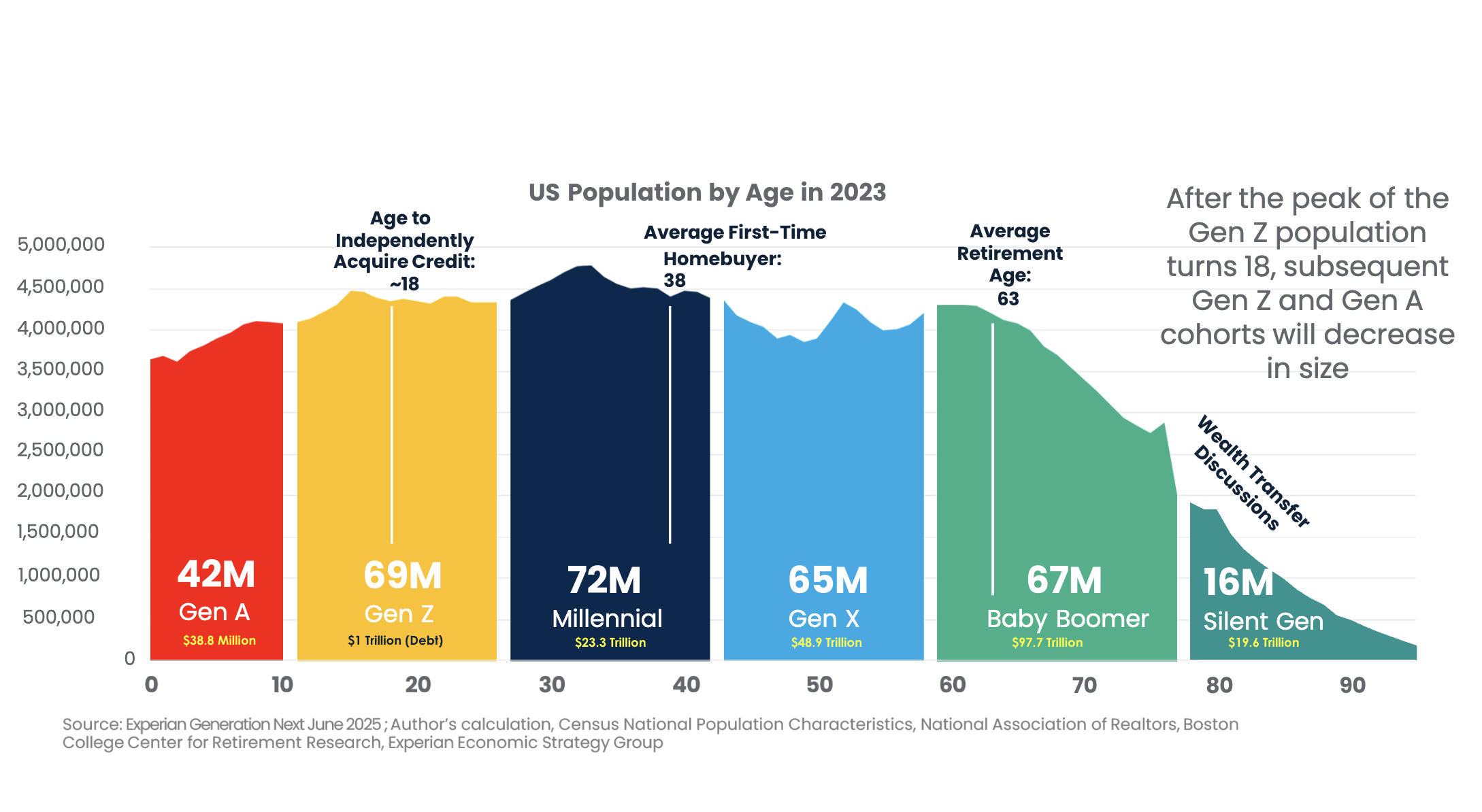
The other side of the demographic shift is that Millennials and younger generations prefer their debit card, when and if they pay by card, according to a U.S. News survey. Some 71 percent of Millennials say debit cards are the payment method that feels most financially sound to them.
A community institution may have more or less of these different demographics today than they had in the past. In many cases, today’s Millennial accountholders were not even born when those debit network decisions were originally made. Interchange revenues are then challenged not because it’s out of the institution’s control, but because the debit program is out of alignment with accountholder activity.
“Maximizing interchange is more holistic today than it was when most institutions chose their debit networks years ago,” Farrell said. “Interactions between the card issuer and the retailer-acquirer matter, but so do online transactions and even ATM transactions in ways institutions sometimes don’t expect.”
Given the long tenure of institutions with a debit network, executives often are unaware of how much has changed, even locally.
Has Your Debit Network and Local Payment Landscape Changed?
Community institutions used to face a revenue-versus-experience tradeoff when selecting a debit network. Certain providers, for example, were more cost-effective or more favorable in terms of income, but they lacked coverage. Institutions then had to balance their programs between the cost, revenue, and availability of a debit network. But it’s different today.
“The debit networks available today have survived through all of the regulatory iterations, through mergers and acquisitions, and even legal battles,” Farrell said. “We have nationwide international card brands, and we have coast-to-coast debit networks. Financial Institutions also have two unaffiliated debit networks on every card, so access is not the issue it was.”
With network access no longer the primary challenge, the opportunity lies in optimizing how a debit program is structured and managed. For example, banks and credit unions typically have far more debit cards in circulation than they have ATMs, and that means an institution has far more chances to incur costs from accountholders using ATMs than it has opportunities to earn income from people using its ATMs. There are far more ATMs owned by large financial institution competitors in the market today than there were even five years ago, but often times an institution has not revisited that element of its program.
Community institutions have long focused on interchange from traditional card transactions made by Baby Boomers, especially in-person point-of-sale activity. According to research by Mintel, though, nearly six in ten Gen Zs and Millennials make half or more of their purchases online. These same generations are the ones buying homes and furniture, starting families, buying toys, car seats, beds, etc., and that spending goes to e-commerce.
The debit strategy needs to evolve for community institutions, and the debit network contract needs to follow suit.
Refocus to Recapture Revenue
Payment markets change at least annually, but institutions are often with the same debit network for 10 years, and sometimes even 20 years. Often, because bundled invoices are challenging to analyze, an institution may not even know just how little the program brings in after expenses.
“When we look at expense reductions, incentives, and interchange all by itself, we can cut expenses by 10, 20 and potentially 30%, and through an evaluation, can see a lift in net interchange by the same percentage, sometimes more,” Farrell said. “One example of this is a client went from not knowing what they made to increasing interchange revenue to $1.1 million from $636,000.”
To obtain these kinds of performance enhancements, institutions must create visibility into how cards are routing, where accountholders spend, and how much, and then align it with their debit networks. Often, obtaining material increases requires assessing transaction data and simulating net income across available debit networks for the best result.
“It’s that full picture of the income and expense that really drives improvement,” Farrell said.
Debit network programs are no longer a set-it and forget-it source of revenue. Changes in regulation, consumer behavior, and debit network economics have created both risks and opportunities for community financial institutions. The good news is that many of the factors affecting interchange performance remain within an institution’s control. The first step is simply bringing the program back into focus.
*Latest Update on the Illinois Interchange Fee Prohibition Act (IFPA):
The Illinois Interchange Fee Prohibition Act (IFPA), which bans credit card "swipe fees" on state/local taxes and tips, is in legal and legislative limbo. State lawmakers delayed the law's effective date by an additional year to July 1, 2027. Concurrently, a federal judge permanently blocked the fee restrictions for nationally regulated banking entities. [1, 2]
Here is the current status breakdown:
Legislative Delay: On June 1, 2026, the Illinois General Assembly passed legislation to push the IFPA’s effective date back by one year to July 1, 2027, granting a reprieve while litigation proceeds. [1]
Federal Injunction: On June 1, 2026, U.S. District Judge Virginia Kendall issued a permanent injunction blocking the IFPA's core interchange fee limit. This ruling came after federal regulators—specifically the Office of the Comptroller of the Currency (OCC)—issued an interim final rule asserting federal preemption over the state law. [1, 2, 3]
Who is Protected: The injunction shields national banks, federal savings associations, out-of-state state-chartered banks, and payment card networks. [1]
Who is Not Protected: Illinois-chartered state banks and credit unions technically remain subject to the IFPA’s fee restrictions, establishing a fragmented compliance environment that is driving ongoing appellate litigation.