3 min read
ChatGPT Just Announced the Quiet Reordering of Banking - Now What?
Virginia Heyburn
:
June 5, 2026
Key Takeaways from This Blog:
- AI is increasingly where financial conversations start, creating a new channel for customer influence and discovery.
- Financial institutions need a strategy for data access, AI visibility, and high-value human interactions.
- Success will depend on being AI-recommended and winning the trust-building verification moments that follow.
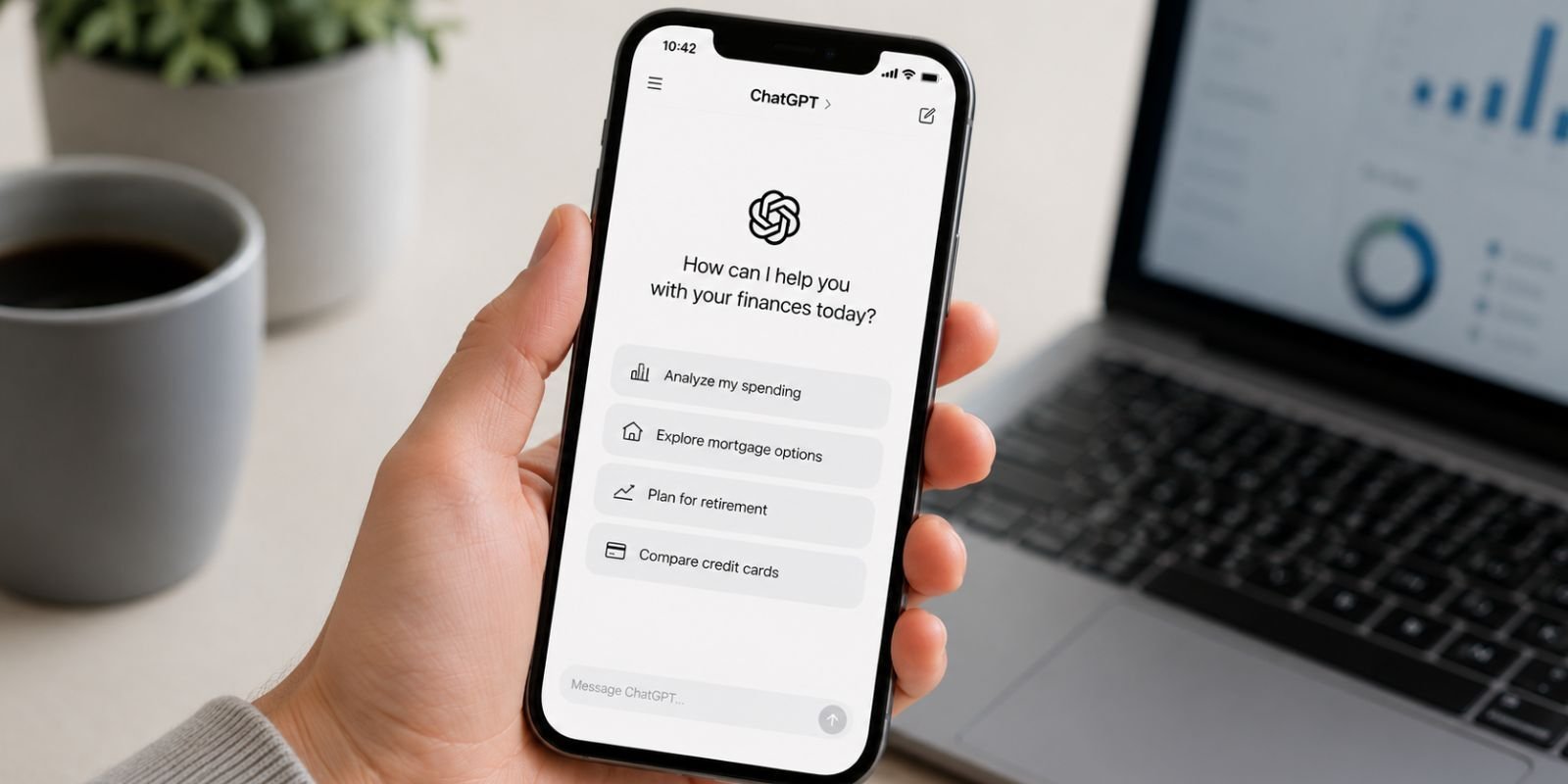
OpenAI just launched a personal finance experience inside ChatGPT, letting users connect their bank, card, and investment accounts through Plaid and ask questions grounded in their actual money. Millions of Americans already ask ChatGPT financial questions every month. Perplexity has been doing something similar since March. The strategic implications run deeper than the product launches themselves.
Most of the industry commentary so far has focused on features and privacy. But the more useful question for community institutions is different: what does it mean when the customer’s financial conversation increasingly starts somewhere other than your app, your branch, or your contact center?
The Conversation Has Moved
For most of the past thirty years, the customer’s first financial question went to their banker, their bank’s app, or a search engine. Increasingly, it goes to an AI tool. When customers want to understand their spending, think through a loan, or plan for a home, they’re asking ChatGPT before they call their bank, credit union, or fintech.
That shifts the competitive landscape in a quiet but meaningful way. ChatGPT is becoming a new place where financial conversations begin—with its own logic and its own emerging economics. Institutions that are findable and recognizable there gain an advantage. Those that aren’t gradually become harder to reach at the moment a financial decision is being formed.
Posture, Visibility, and the Moments That Matter
Executive teams and boards should ask three questions to support a conversation about the best way forward:
What is our financial institution’s data posture? Customers will connect banking accounts to ChatGPT through Plaid whether institutions engage proactively or not. The choice is whether to participate on negotiated terms—clear API agreements, defined data scope, considered consent flows—or to let the connection happen through legacy practices. Both paths exist today. One is more deliberate.
What is our financial institution’s visibility strategy? AI-powered search is starting to influence how consumers discover financial products, and the discipline of optimizing for that visibility remains early and uncrowded. Smaller, specialized institutions have a real opportunity to be recognized for the kinds of specific, local queries that have always been their strength: “Best small business checking in our region.” “Bank or credit union with a strong teacher mortgage program.” These are queries an LLM will answer. The question is which institution’s content is structured to be the answer.
Is our financial institution investing in human moments? AI will be highly capable at scenario analysis. It will be less capable in the emotional dimension of money—the divorces, the loss of a parent, the small business under pressure, the first home, the retirement transition. Those moments have always been where community institutions create their deepest value. In a more AI-saturated environment, they become more differentiated, not less.
A Window Worth Paying Attention To
Core providers are moving in this space as well. Fiserv recently launched agentOS, an agentic AI operating system for banking, with OpenAI and AWS as collaborators. FIS announced a partnership with Anthropic. Jack Henry continues to invest in its own data and AI capabilities. These are transformational technology shifts, not strategic roadmaps with feature/functionality updates that have defined improvement in the past.
That makes the next twelve to eighteen months a useful planning window. Conversations with core providers about their agentic AI roadmaps belong in the next quarterly review, not the next strategic plan.
What Most of the Coverage Is Missing
Three implications are largely absent from the current conversation around ChatGPT's move and deserve a place on the planning agenda.
The first is customer acquisition cost. If ChatGPT is becoming a meaningful distribution channel for financial products, then the institutions that are present there will see materially different acquisition economics than those that aren’t.
The second is Answer Engine Optimization. The discipline of becoming the answer an AI assistant cites is still early, still uncrowded, and disproportionately rewards specialized institutions with clear, locally authoritative content. The window for that advantage is probably twelve to eighteen months.
The third is what could be called the verification call. Most customers don’t act on AI advice—they verify it first, often by calling someone they trust. That moment is the most valuable customer interaction in the agentic era, and very few institutions are organized to win it. In many cases, AI may originate the recommendation, but trust will determine the final decision.
And when your customer reaches out to verify you, dazzle them.