Skip to the main content.

2 min read

Deposits Just Became a Daily Decision

Deposits Just Became a Daily Decision

Key Takeaways from This Blog:

  • Deposits have become actively competitive assets rather than passive balances, as customers can instantly move funds in search of better yield, utility, and convenience.
  • Stablecoins are less a crypto story than a deposit and customer-behavior story, competing directly for everyday cash balances through embedded utility, real-time movement, and yield-like incentives.
  • Banks and credit unions will retain deposits by delivering superior utility, real-time payments, seamless digital experiences, and proactive balance retention strategies, rather than relying primarily on pricing or customer inertia.

Deposits are not boring. They are simply familiar, which is different. They are the most actively negotiated product in banking, even when the negotiation is silent.

For decades, many institutions benefited from “lazy money.” Balances sat. Rate sensitivity lived in a small corner of the franchise. That era is over. It’s now the era of money “in movement for living” vs money “that will be moved in due course.”

Yield is visible everywhere. Transfers are frictionless. Customers carry a portfolio in their pocket, and they rebalance it without calling you. In that environment, every deposit category becomes interest rate sensitive, including operating checking, not just money markets and CDs.

Stablecoins accelerate that shift. And the Clarity Act moving through Congress is set to push this forward.

Most commentary frames stablecoins as a crypto market structure story. Treat it instead as a funding and behavior story. Stablecoins compete for the same everyday cash you assume is anchored: payroll float, bill pay buffers, and the balances that make relationships profitable.

They do it with three wedges.

1) Convenience that lives inside the moment

Money that resides inside a wallet, marketplace, or payroll app does not need to move to be used. It is already in the flow. Your deposit relationship becomes optional when utility is elsewhere.

2) Instant movement as a default expectation

Real time settlement collapses the distance between intent and confirmation. When the customer experiences “now” in one place, “two days” feels like a penalty everywhere else.

3) Yield like rewards without calling it interest

Policy debates are already circling the idea of stablecoin rewards that behave economically like yield. Even if regulators constrain direct interest, incentive design will keep evolving. Consumers will not parse the legal definition. They will compare outcomes.

What this means for banks and credit unions

Do not panic. Get specific.

Segment liquidity with honesty. Separate operating cash, rate sensitive parking, and primary relationship balances. Protect each with a different strategy.

Compete on utility before price. Real time payments, instant disbursements, clean digital onboarding, and fast dispute resolution are deposit retention tools now.

Make speed governable. If software can move money, consent, limits, disputes, and reversal paths must be explicit, enforceable, and auditable.

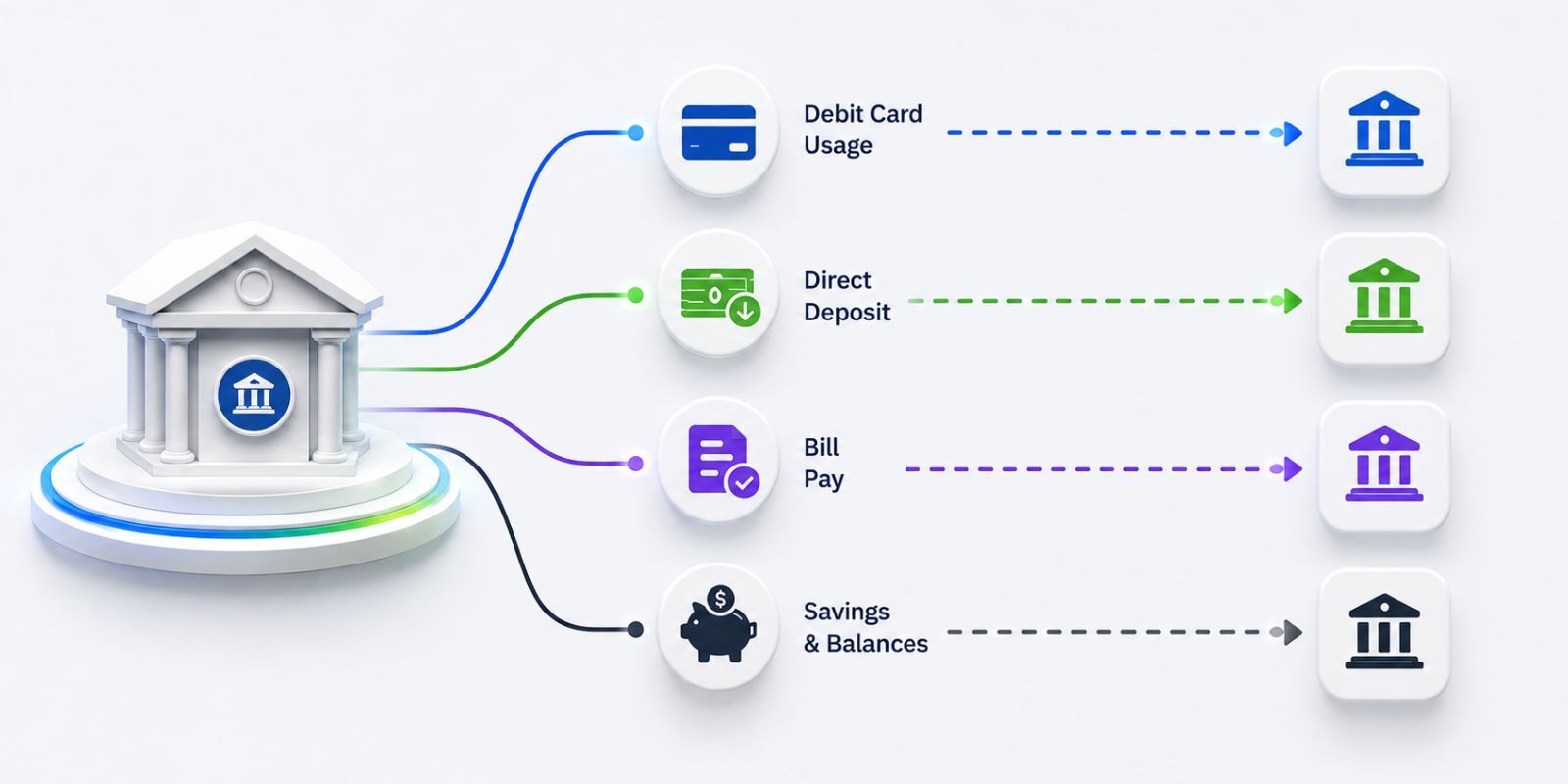
Build an early warning system. Track external transfers, wallet outflows, declining debit activity, and maturing behavior. Deposit flight rarely starts with a complaint. It starts with quiet substitution.

Bottom line: stablecoins are not coming for “boring deposits.” They are coming for assumed deposits. The institutions that win will treat deposits as an active value exchange, then earn the right to keep balances by delivering utility at the moment of need through a reimagined “digital banking wallet” not one that just holds cards and facilitates mobile tap-to-pay but the entirety of the consumer’s or small business’s finances with the embedded tools for orchestration.