1 min read
Why Community Banks Must Win on Efficiency Now by Becoming Truly Nimble
Key Takeaways From This Blog: The Huntington Bancshares acquisition of Cadence Bank, creating a $258B-asset institution, highlights a powerful...
Navigate this high stakes process with precision.
A solution delivering fast, efficient, and accurate core data.
Digital solutions to grow, scale, and outperform.
Reliable, efficient, and integrated core platforms deliver results.
Select modern communications channels to integrate with core and digital solutions.
Strategic Planning
Support services for the strategic planning process at every level.
M&A Planning
Realize the key value drivers resulting from your merger or acquisition.
Performance Benchmarking
Tailored metrics and benchmarks designed to assess relationships.
Organizational Efficiency
Enhance efficiency across branches, digital channels, and contact centers.
A digital library of industry news, analysis, best practices, and thought leadership tailored to the challenges and opportunities faced by financial institutions.
Our in-depth analysis of conversion strategies, M&A activity, and the evolving landscape of financial services.
A podcast channel for the time-constrained banking professional delivering sharp insights on fintech, strategy, and leadership to help you stay ahead in a fast-changing financial world.
For 360fi Workflow clients only. Sign in to access the workflow library and other guides, forms, and tutorials.
2 min read
Fabio Biasella
:
June 18, 2026
Key Takeaways from This Blog:
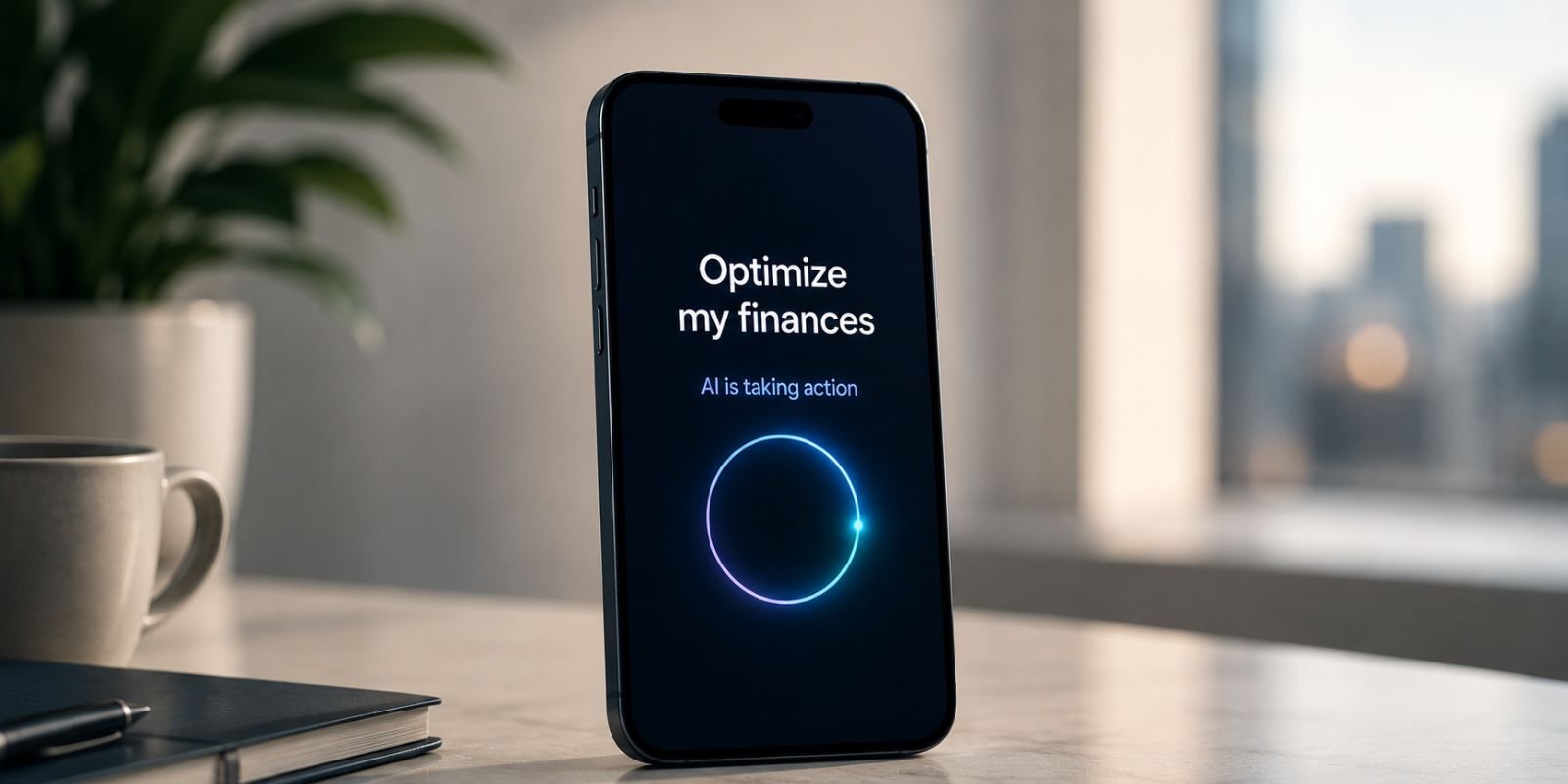
Robinhood just crossed an important threshold. Not because it shipped another investing tool, but because it normalized delegated action.
Customers can now connect a third party AI agent to a dedicated Robinhood Agentic Trading account through Robinhood’s Trading MCP endpoint. The agent can read portfolio and account information, then place trades inside that fenced account. Robinhood is explicit that this is rolling out and that the customer remains responsible for what the agent does. (Robinhood)
This is not about whether an agent can pick stocks.
It is about what happens when a customer stops tapping buttons and starts issuing intents. Recent studies indicate consumers will use AI to guide decisions sooner than they will authorize AI to move money. However, the adoption curve “AI to execute” is real and for a growing portion of consumers. Preparing our institution needs to begin earnestly.
The strategic reframing
For decades, banks competed on products, channels, and pricing.
Agent driven finance changes the battleground. The agent becomes the interface layer, and the interface layer becomes the router for attention, cash, and credit.
Robinhood’s docs describe MCP, Model Context Protocol, as an open standard that allows an AI agent to connect to external apps and take actions, not only answer questions. (Robinhood)
Once that pattern becomes normal in investing, it does not stay contained.
The bridge into deposits
Deposits have always been a relationship anchor because they sit closest to cash flow. Now imagine the customer telling an agent:
When a machine is monitoring balances, transfer options, and timing every day, the deposit relationship can become more fluid, because switching costs fall and comparison becomes continuous.
The important point is not rate shopping. It is relationship portability.
The bridge into loans
Loan relationships are next, because they are also optimization problems.
Agents will be good at tasks like refinance break even math, payoff ordering across debts, and timing credit actions around life events. The customer does not need to “start shopping.” The agent can keep shopping quietly, then surface the best next move when it matters.
Why this matters beyond brokerage
Robinhood is also extending the agent pattern into spending.
Its Agentic Credit Card setup uses a similar MCP connection, but for a virtual card. Robinhood states the agent can fetch virtual card details, view spending history, and use the card number to complete purchases. Customers can require approval for each purchase or set a monthly limit, and access is limited to the specific virtual cards the customer authorizes. (Robinhood)
That is the contour of the future relationship: permissioned, limited, and action oriented.
The governance problem banks cannot ignore
Robinhood’s disclosures also highlight the unavoidable tradeoffs: the customer can authorize third party AI providers to access sensitive data, and that data may not remain inside the platform’s privacy environment once shared. (Robinhood)
Banks should treat this as a preview of coming expectations for machine readable consent, auditable controls, and clear liability paths.
What banks should do now
Bottom line This is not a story about one model or one agent. It is a story about a new operating posture: customers delegating financial action to software. The institutions that win will be the ones whose deposit and loan relationships remain the safest, most useful endpoint for that delegation.
1 min read
Key Takeaways From This Blog: The Huntington Bancshares acquisition of Cadence Bank, creating a $258B-asset institution, highlights a powerful...
1 min read
Mastercard and Visa both recently unveiled powerful AI-enabled advancements that will change the payments industry. These announcements are not just...
1 min read
The banking industry as we know it is changing. While digital banking has reshaped the way customers interact with financial institutions, the next...