
Skip to the main content.

4 min read

Branches Aren’t Dead. Bad Branch Math Is.

Branches Aren’t Dead. Bad Branch Math Is.

Key Takeaways From This Blog:

  • Branch closures are not proof that branches are obsolete; they often reveal a lack of clarity about each channel’s role in the business model.
  • Banks and credit unions should manage branches, digital platforms, ATMs, and contact centers as one connected delivery ecosystem built around the customer journey.
  • Optimizing the entire delivery model, not simply cutting branch costs, can improve efficiency, increase revenue, and preserve the relationship advantages of community institutions.

During the first quarter of 2026, 216 commercial bank branches closed. Great Southern Bank announced plans to close nine branches across Missouri, Arkansas, and Kansas. This month, PNC announced plans to close 18 branches across Colorado and Arizona. There have been three bank failures already in 2026, compared to two in all of 2025.

The reaction is predictable: branches are dying and traditional banking might be next. Digital won!

After 30+ years in banking, I can tell you branch closures are rarely just about branches. They are about business model clarity. They are about whether each channel has a defined role, how each channel works together, in harmony or conflict, and whether the institution understands how customers move through their organization.

It’s time to shift the math when measuring branch success. For decades, branch math was simple. Count transactions. Count headcount. Count deposits assigned to the location. Count teller lines. Count cost per branch. If activity dropped, the location looked weaker. If expenses stayed flat, the branch would look worse. Then digital adoption accelerated, and the spreadsheet got very excited.

These traditional financial metrics measure the success of the location in isolation, rather than measuring its role in complementing all channels in the overall success of consistently delivering a value-added customer journey. There was a time when we discussed this concept and called it omni-channel banking. We suggested to the customer and ourselves that the experience could be the same in any channel the customer chose to use, but the concept morphed quickly into which channel was most inexpensive to maintain, leading to delivery channels being set up as independent verticals in competition with one another and in conflict with a seamless customer experience.

Once again, the Sears lesson I’ve referenced in the past becomes useful to consider. Sears did not fail because it had stores. It failed because its stores became disconnected from how customers wanted to shop. Physical infrastructure became an anchor because it was not integrated into a modern customer experience.

Amazon took the opposite path. It started digitally, then added physical infrastructure only when it supported the broader ecosystem. Stores, pickup points, fulfillment, data, and logistics. The physical space had a job.

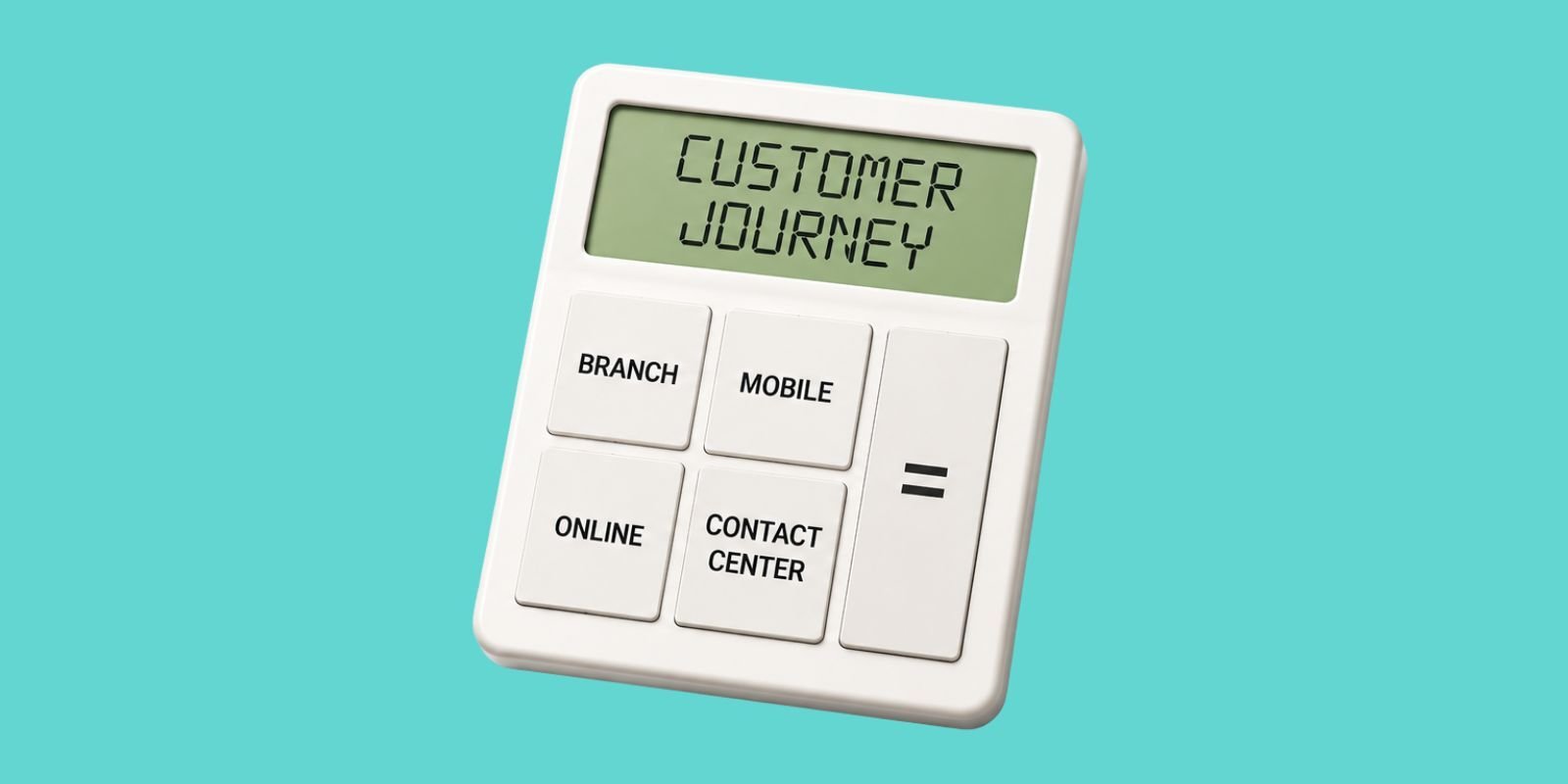
Financial institutions should pay attention and recognize that all delivery channels should be managed as one ecosystem. A branch is neither sacred nor obsolete; rather, it is infrastructure that is only strategic when it is connected to a system that creates value as one piece of the overall customer journey.

With one delivery ecosystem, branches, ATMs, ITMs, contact centers, online banking, mobile apps, and websites, the metrics for success are shared across them rather than divided among separate verticals. Separate goals, separate staffing models, separate management layers, and separate technologies, create a disjointed and friction-filled customer experience wrapped in unnecessary overhead. A common delivery ecosystem can transform that into a high-quality, seamless experience delivered efficiently.

Stop thinking of each channel as a separate point of entry and think of it like the customer does: as one bank or credit union that they go to when they need to move money, solve a problem, open an account, get advice, or keep their assets safe and sound.

While closing a branch to reduce expenses can be necessary due to shifting demographics, traffic patterns, and customer behaviors, it will only have a positive impact on the expense side of the income statement. Redesigning the delivery model can reduce expenses and increase revenue. Optimize the delivery network as a whole, and both the expense and revenue sides of the income statement can be positively impacted.

Of course, what I am suggesting is a significant change, which is never easy and particularly daunting in an industry that is designed to be risk-averse. Yet community banks and credit unions leverage the strengths that scale cannot buy; they cannot continue to operate with a clunky operating model forever. Additionally, many of those strengths were built on and continue to rely on the branch: proximity, trust, community commitment, and a local brand that still feels human.

At Engage fi, we have helped several banks and credit unions develop more nimble operating models designed around the common delivery ecosystem. We recognize that true efficiency starts with the customer journey. It looks at how work moves and ripples through the institution, where channels conflict, where staff are underutilized, where technology duplicates effort, and where the institutional structure forces the customer into redundant activities.

If your institution is wondering if you need to rethink your operating model, a good place to start is to consider your efficiency ratio. If it’s north of 65%, you do.

However, be careful because the efficiency conversation often starts with an expense line-item review and quickly leads to focusing only on the cost of the branch. From the CFO’s office, it makes sense. Staffing and facilities expenses are large numbers, making them easy targets, and when viewed in isolation, they can become burdensome.

However, viewing the branch in isolation is bad math. Instead, start by asking a few broader questions:

  • Do your delivery channels create one coherent customer journey, or do they drag customers through conflicting experiences?
  • Is the end-to-end customer account opening journey the same across each delivery channel?
  • What is the primary role of each branch: sales, service, advice, fulfillment, digital support, business development, or market presence?
  • What does your call overflow volume look like, and how do you handle it?

The institutions that get the math right will not be the ones with the most branches or the fewest branches. They will be the ones who know exactly why each branch exists, how each channel works together, and how every interaction moves through the enterprise to create customer value.

That is the math that leads to a healthy outcome driven by both sides of the income statement and a sustainable model that preserves the community bank and credit union advantage.

The Branch Is Banking’s Trust Epicenter

1 min read

The Branch Is Banking’s Trust Epicenter

Key Takeaways from This Blog:

Read More
Digital Bank Brands: Deposit Growth Engines or Paper Tigers?

1 min read

Digital Bank Brands: Deposit Growth Engines or Paper Tigers?

Key Takeaways From This Blog: Inspired by early successes like Chime and Marcus, dozens of community and regional banks launched digital-only brands...

Read More